Trusted by 100+ companies across UAE and globally












One system, one set of numbers, every department working from the same
data — that’s what an ERP is supposed to do, and often doesn’t. Way2Smile Solutions builds ERP systems for businesses in Dubai and the UAE designed around how your teams actually operate, not a generic module set.
Trusted by 100+ companies across UAE and globally
"It's hard to pull off an efficient data strategy for a multi-dimensional organization like ours. Yet, W2S Solutions made it look easier and helped us leverage data. It's unreal what they could do with tech!"
"W2S Solutions made the entire journey stress-free and brought my dream project to life. They were attentive, approachable, and truly a great team to work with. I'd recommend them in a heartbeat."
"W2S Solutions truly understood my vision and built something reliable, accurate, and future-ready. It's now a core part of our business, and we look forward to growing it together."
We’re the team businesses in Dubai call when their operations have quietly split into five sources of truth — one for finance, one for inventory, one for HR, and a Slack thread everyone actually trusts more than any of them. Way2Smile Solutions implements and builds ERP systems that pull that back together, using platforms like Odoo, SAP, and Microsoft Dynamics where they fit, and custom-built modules where they don’t.
We’ve also cleaned up after ERP projects that didn’t work — systems that technically launched but got quietly abandoned by half the staff within a year. Usually the software wasn’t the problem. The rollout was built around what the platform wanted, not around how the business actually ran. That’s the part we spend the most time on.

Two decades of implementing and building business systems for companies across Dubai, the UAE, and internationally — long enough to have seen most versions of “the ERP didn’t stick.”
Business analysts, systems integrators, and developers on our ERP team, because a good implementation needs someone who understands your process, not just the software.
200+ ERP implementations and custom builds, spanning finance, inventory, HR, procurement, and manufacturing systems.
99% of our ERP projects land on schedule — a number that matters more here than on most projects, since a delayed go-live usually means staff have already reverted to their old workaround by launch day.
An ERP system touches finance, inventory, HR, and operations at once — which means the build has more moving parts than most software projects. Here’s what each of those parts actually involves.

Deploying Odoo, SAP, Microsoft Dynamics, or another platform, configured against how your departments actually hand off work to each other — not the demo workflow the sales deck showed you.

For businesses where no off-the-shelf platform fits — a manufacturing process, a distribution model, a compliance requirement — we build the module or the system from scratch instead of forcing a workaround.

Getting finance, inventory, HR, and procurement to actually talk to each other, so a stock update in the warehouse shows up in the finance report without someone manually
re-entering it.

Moving years of historical records out of old systems and spreadsheets without losing the version everyone actually trusts along the way.

Setting up approval chains, permissions, and reporting structures that mirror your actual org chart, not a generic three-tier approval flow that doesn’t match how your team works.

Staying on after go-live, because the request that comes six months in — “can we add a module for this new warehouse” — is usually more telling than anything discovered during the original build.
From Dubai startups to established UAE enterprises, explore how we’ve helped businesses launch faster, rank higher, and convert better through tailored web development solutions.

Multilingual, Self-Managed — Built to Move as Fast as the Team

ML-Powered Planogram Analysis, Verified Globally.

ML-Powered Precision, Store by Store

From Scattered Systems to One Verified Experience

Thousands of SKUs, One Source of Truth
The honest reason most ERP rollouts fail isn’t the software — it’s that nobody spent enough time understanding the business before configuring it. So instead of a features list, here’s what we actually do differently:
Not a single stakeholder interview — actual time with the person doing the monthly close, the person managing the warehouse, the person running payroll. Software decisions get made from what we learn there, not from a discovery call summary.
Sometimes the fix is a workflow change, not more software. We’d rather say that upfront than sell a bigger implementation.
Some agencies push whichever ERP they’re a reseller for, regardless of fit. We work across Odoo, SAP, and Dynamics, and we’ll recommend custom development over any of them when the business genuinely needs it.
A single “everyone migrates today” launch is where most adoption failures start. We roll department by department where it makes sense, so problems surface in one team instead of everywhere at once.
An ERP configured for the business you were at launch usually needs adjusting a year later. We treat that as expected, not as scope creep to bill separately for every time
ERP earns its cost fastest in businesses juggling physical inventory, multiple locations, or departments that depend on each other’s numbers being right in real time. A few examples of what that looks like in practice:


Every ERP project follows the same core stages, but the sequence bends around how your departments actually hand off work — not a fixed template applied regardless of fit.
We spend real time with the people doing the work — finance, warehouse, HR — before any configuration decision gets made. This is usually the stage other implementations rush.
Each module gets configured and checked against the real process it replaces before we move to the next one — not built end-to-end and tested all at once at the finish line.
Historical records move over, checked against source data, so the new system starts with numbers people already trust.
Department by department where it makes sense, with hands-on training that accounts for the team that’s going to resist the change, not just the team that’s excited about it.
Your processes will change. We stay engaged so the ERP changes with them instead of becoming the next system someone works around.
Notes from implementations we’ve run — where adoption stalled, what a phased rollout actually looks like in practice, and the difference between a system that’s live and a system people actually use.
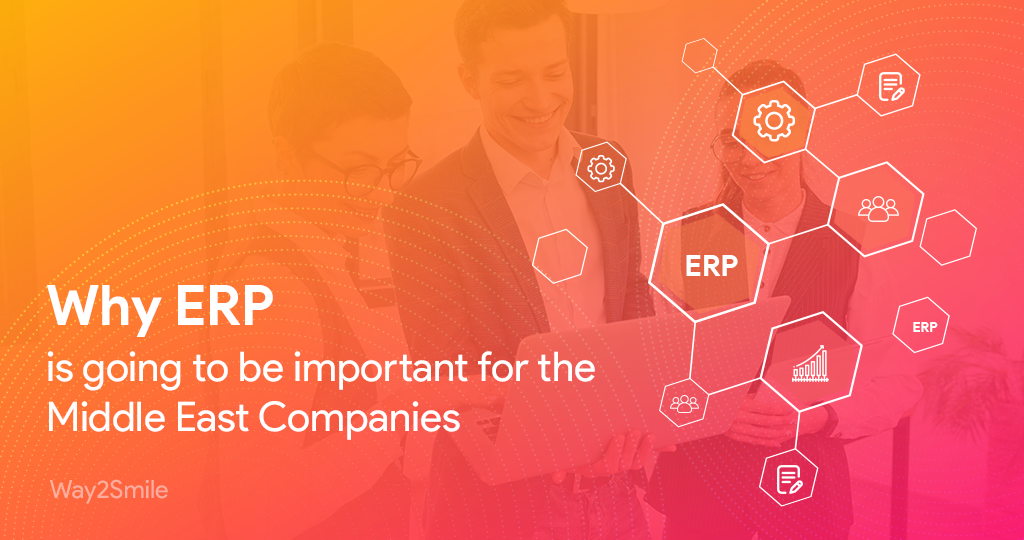
Discover why ERP is becoming essential for Middle East companies. Learn how ERP improves efficiency, streamlines operations, supports growth, and drives digital transformation.

Learn how Middle Eastern businesses can achieve long-term success through sustainable growth frameworks. Drive positive change for your company and the community.

AI is quietly transforming enterprise solutions by improving decisions, streamlining operations, and boosting customer service across industries.
The specific ERP software used in Dubai varies across businesses and industries. Some commonly used ERP solutions in the region include SAP, Oracle, Microsoft Dynamics, and Sage, among others. The choice of ERP software depends on the unique requirements and preferences of each organization.
Enterprise Resource Planning (ERP) solutions are integrated software systems designed to streamline and manage core business processes and functions within an organization. These encompass a range of activities, such as finance, human resources, procurement, manufacturing, supply chain management, and customer relationship management. ERP systems consolidate data and processes into a unified platform, providing real-time insights, improving collaboration, and enhancing overall efficiency. The goal is to facilitate better decision-making, optimize resource utilization, and promote seamless communication across various departments, ultimately contributing to the organization’s success and competitiveness.
An ERP solution works by integrating business processes and data into a unified system with various modules. Users input data, and the system centrally processes, stores, and manages it. This promotes real-time collaboration, informed decision-making, and efficiency through automated and standardized processes across the organization.
Great products start with a conversation. Whether you’re a startup or an established enterprise, Way2Smile Solutions is ready to listen, plan, and deliver. Drop us a line.
