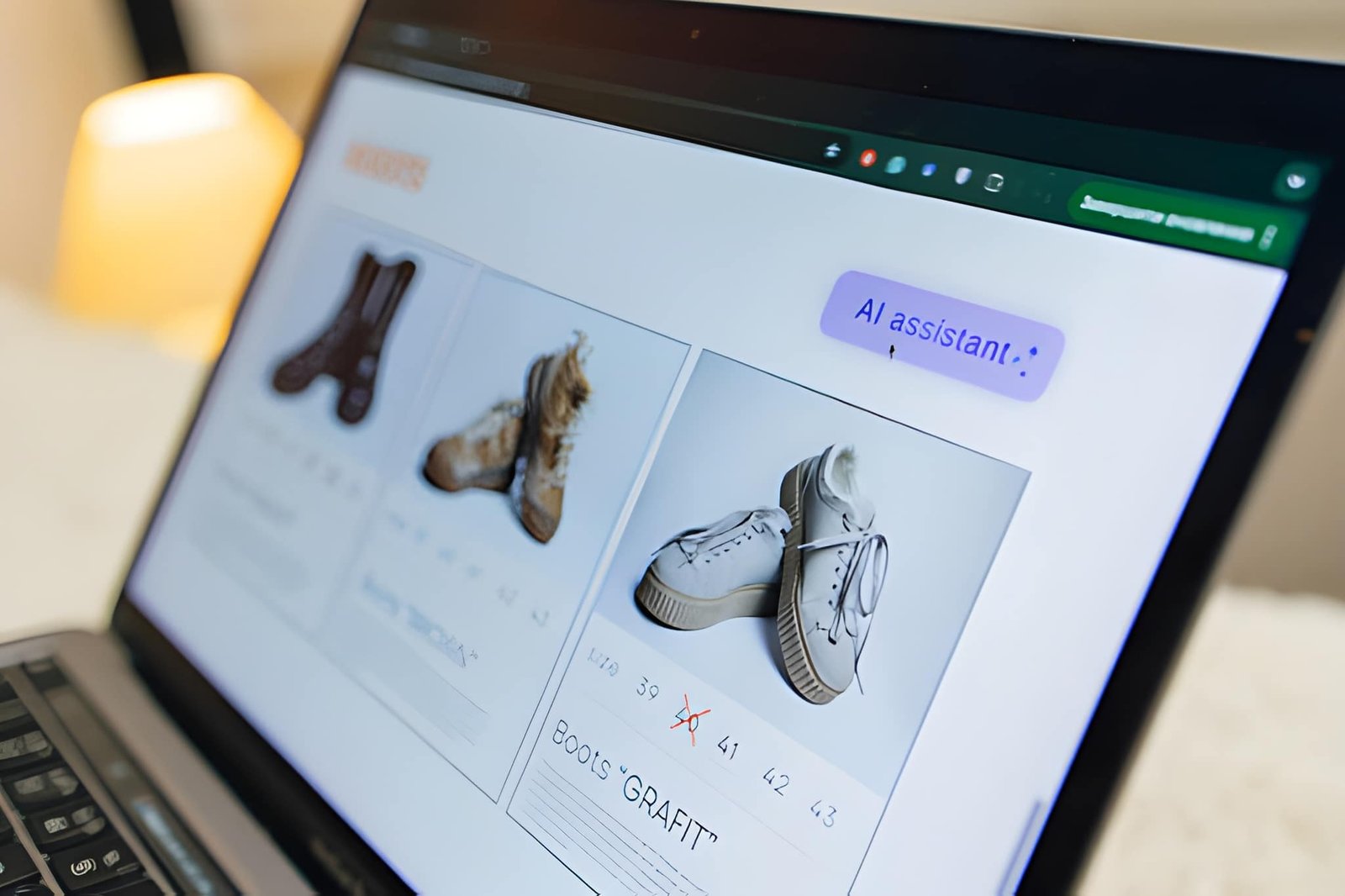
A few years back, building a website meant wireframes, a design review, a development sprint, then weeks of back and forth before anything went live. That timeline has quietly collapsed. It is because they have now utilised the true potential of AI. AI started doing a real share of the work alongside them.
In modern website development services, the term "AI" doesn't mean some unimaginable robot writing your entire site while you sleep. It refers to tools that generate layout options in minutes, flag a broken link before a user ever sees it, or write a first draft of your homepage copy so a human isn't starting from a blank page. It's less science fiction, more a genuinely useful assistant sitting inside the process.
The way sites get planned, designed, and kept running has shifted alongside it. Planning now leans on data instead of guesswork, pulling from what similar sites actually convert on. Design tools suggest layouts based on thousands of examples instead of one designer's memory. And maintenance, which used to mean someone manually checking for broken links every few weeks, increasingly happens on its own, quietly, in the background.
Why are businesses actually adopting this, beyond it being the trendy thing to do? A few honest reasons:
- Customers expect a site to feel responsive to them specifically, not identical for every visitor
- Development budgets are tight, and AI-assisted workflows cut real hours off a build
- Competitors are already shipping smarter, faster sites, and standing still starts to cost market share
- The demand for genuinely intelligent digital experiences, not just fast-loading pages, keeps climbing every year
How AI Is Transforming Website Development
Design used to start with a blank Figma file and a lot of staring whereas it now starts with an AI tool generating three or four layout directions based on the brand's goals. These directions are what a designer then refines instead of building from zero. It doesn't replace the designer's eye, it's reshaping how UX decisions actually get made earlier in the process. It just removes the blank-page problem.
Coding has sped up in a similar way. AI-assisted tools can write boilerplate, catch obvious bugs, and suggest fixes mid-keystroke, shaving real time off a development cycle that used to be mostly repetitive typing.
Content is where this gets noticed fastest by anyone outside the dev team. AI tools draft copy, suggest headlines, and flag where a page is likely to underperform on search, before it ever goes live rather than after three months of disappointing traffic.
And testing has quietly gotten smarter too. Instead of a QA team manually clicking through every page after every update, AI-driven testing tools can flag anomalies, broken flows, or performance dips almost as soon as they appear, which matters a lot more than it sounds like on a site that changes weekly.
Key Technologies Driving AI Website Development
A short list of what's actually doing the work behind most of this, alongside the databases and infrastructure quietly holding it all together, without the marketing gloss.
- Generative AI — drafts design directions and written content, giving teams a starting point instead of a blank canvas
- Machine learning — the backbone of most personalization, learning what a visitor actually responds to rather than guessing
- Natural Language Processing (NLP) — powers chatbots and smarter on-site search that understands intent, not just exact keywords
- Computer vision and voice interactions — handle image recognition and voice-enabled search, useful well beyond retail
- AI-powered analytics — turns raw traffic data into actual predictions, not just a dashboard full of numbers nobody checks
Most sites won't need all five at launch. A B2B site might lean entirely on analytics and NLP-driven search. An eCommerce site will probably want the whole stack. The mix depends on what visitors are actually there to do.
Benefits of AI in Website Development for Businesses
The upside, when it's implemented with some restraint, tends to land in a few consistent places:
- Development timelines shrink, sometimes by weeks, once AI handles the repetitive parts of design and code
- Maintenance costs drop, since a lot of monitoring and small fixes happen automatically instead of eating a developer's Friday
- User experience improves in ways visitors feel even if they can't name why, the site just seems to "get" them
- Performance and scalability get easier to manage as AI tools flag issues before they become outages, part of a broader shift in how websites get optimized these days
- Conversion rates climb when personalization actually works, showing the right product or message to the right visitor at the right moment
None of this is automatic. A poorly planned AI feature can just as easily slow a site down or confuse users. The gains show up when the implementation is thoughtful, not just present.
Essential AI Features Every Modern Website Should Include
Not every site needs every feature on this list, but most modern sites, especially ones built with a mobile-first approach in mind, benefit from a handful of them:
- AI chatbots and virtual assistants for round-the-clock questions
- Personalized product or content recommendations based on real browsing behavior
- Intelligent search that understands what a visitor means, not just what they typed
- Automated customer support that handles the repetitive tier-one questions
- Predictive analytics dashboards that flag trends before a quarterly report would catch them
- AI-powered accessibility improvements, like automatic alt text or adaptive contrast
- Marketing automation integrations that connect site behavior to email and ad campaigns without manual exports
Trying to launch with all seven at once is usually a mistake. Picking two or three that solve a real, specific problem tends to work far better than a feature checklist.
Industries Benefiting from AI-Powered Websites
Healthcare portals use AI to help patients book appointments, check symptoms, and get answers without waiting on hold, which matters more than it sounds when someone's anxious about a result.
Retail and eCommerce lean hardest into personalization of any industry here, and it shows in the numbers. A site that shows the right product first tends to convert noticeably better than one that treats every visitor the same.
Banking and financial services use AI-driven fraud checks and chat support to handle routine questions that used to require a phone call and a hold queue.
Real estate platforms match listings to what a buyer's actually shown interest in, instead of dumping every property in a city onto one long results page.
Education and eLearning sites adapt content based on how a learner is progressing, rather than pushing everyone through an identical course structure.
Manufacturing and logistics companies use AI-powered dashboards on their sites to give partners and clients real-time visibility into orders and shipments, cutting down the emails asking "where's my order."
Hospitality and travel businesses use recommendation engines to surface destinations or rooms a visitor is actually likely to book, instead of a generic list sorted by price.
AI Website Development Process and Project Timeline
The process starts, as most good projects do, with actually understanding the business problem rather than jumping straight to tools. From there comes an AI strategy: deciding which features genuinely serve the goal instead of adding AI because it sounds impressive in a proposal.
UI/UX design follows, often informed by AI-generated layout suggestions that a designer then shapes into something that actually fits the brand. Development and AI integration happen together rather than as separate phases, leaning on the right APIs to connect everything cleanly and a tech stack chosen for the specific build rather than habit, since bolting AI onto a finished site tends to create more problems than it solves.
Testing and optimization come next, checking not just whether the site works but whether the AI features actually behave the way they're supposed to across different scenarios. Deployment isn't really the end though. AI models and site behavior both need ongoing monitoring, since what worked at launch can quietly stop working as user patterns shift.
On timelines: a straightforward business site with one or two AI features, smart search or a chatbot, can go live in six to ten weeks. A more complex build with deep personalization, custom recommendation engines, or predictive dashboards usually runs three to six months. Complexity, the amount of custom AI training required, and how many systems it needs to talk to all push that timeline around.
Challenges and Best Practices for AI Website Development
A few things tend to trip projects up, worth naming plainly.
Data privacy comes first. AI-driven personalization runs on user data, and mishandling it isn't just a legal risk, it's a trust problem that's hard to walk back once it happens.
Ethical use matters too, especially with chatbots or automated interactions. A visitor should always be able to tell they're talking to AI, not misled into thinking otherwise.
Automation still needs human oversight. A fully automated site with nobody checking on it occasionally will eventually drift, showing broken recommendations or outdated content nobody caught.
Performance can suffer if AI features aren't built carefully. A heavy recommendation engine that slows page load defeats its own purpose.
Scalability matters from day one. A technology that works for a thousand visitors a month can buckle at a hundred thousand if it wasn't chosen with growth in mind.
And none of it stays fixed. Regular monitoring and continuous optimization are not optional extras. These are what keeps an AI-powered site actually working six months after launch instead of quietly degrading.
So, How To Choose The AI Website Development Partner
Selecting a web development company for an AI-driven site is a different conversation altogether. Worth checking a few things before committing:
- Real, demonstrable experience with AI technologies, not just a buzzword on the homepage
- Industry-specific expertise, since a healthcare site and a retail site need very different AI priorities
- The ability to integrate AI cleanly with whatever systems already exist, CRM, inventory, analytics
- A genuine focus on security, compliance, and scalability, not just a fast initial launch
- A clear plan for support after launch, since AI features need tuning long after the site goes live
This is where Way2Smile (way2smile.ae) tends to earn its reputation. As a website development company built around actual business outcomes rather than templates, Way2Smile starts by understanding what a business is trying to achieve before recommending any AI feature, the same thinking behind every custom website development engagement they take on. That approach runs through their custom web development work, tailored to the specific industry and goals of each client rather than a one-size-fits-all package pulled off a shelf.
The Future of AI in Website Development
A few shifts are already visible in where this is heading.
Personalisation today is going further than product recommendations. It entails shaping entire page layouts and navigation paths based on who's visiting. Autonomous website management is also picking pace, with AI handling routine updates, security patches, and performance tuning largely on its own, freeing teams from constant manual upkeep.
Voice and multimodal interactions are expanding beyond search. The technology helps visitors navigate or ask questions using their voice the same way they'd talk to a person. Predictive automation is another big player. It anticipates what a visitor needs next rather than waiting for them to click and find it themselves.
For businesses still treating their website as a static brochure, the gap is only going to widen. Investing in an AI-ready site now isn't about chasing a trend, it's about not being the last one still running a page that hasn't changed since 2019.
That's really the case for starting today rather than waiting. As web development services continue shifting around AI at the core rather than the edges, having a partner who understands both the technology and the business behind it matters more than ever. Way2Smile (way2smile.ae) has built that kind of trust with businesses across industries, helping them prepare not just for where websites are now, but for where they're clearly headed next.